

only available in a paid plan. Please activate a license key to use this feature.
Overview
SCIM provisioning lets your identity provider manage Sourcebot organization membership automatically. When enabled, your identity provider becomes the source of truth for who should have access to your Sourcebot organization. Sourcebot supports SCIM 2.0 user provisioning for identity providers such as Okta and Microsoft Entra ID.Configure
- Navigate to Settings -> Security.
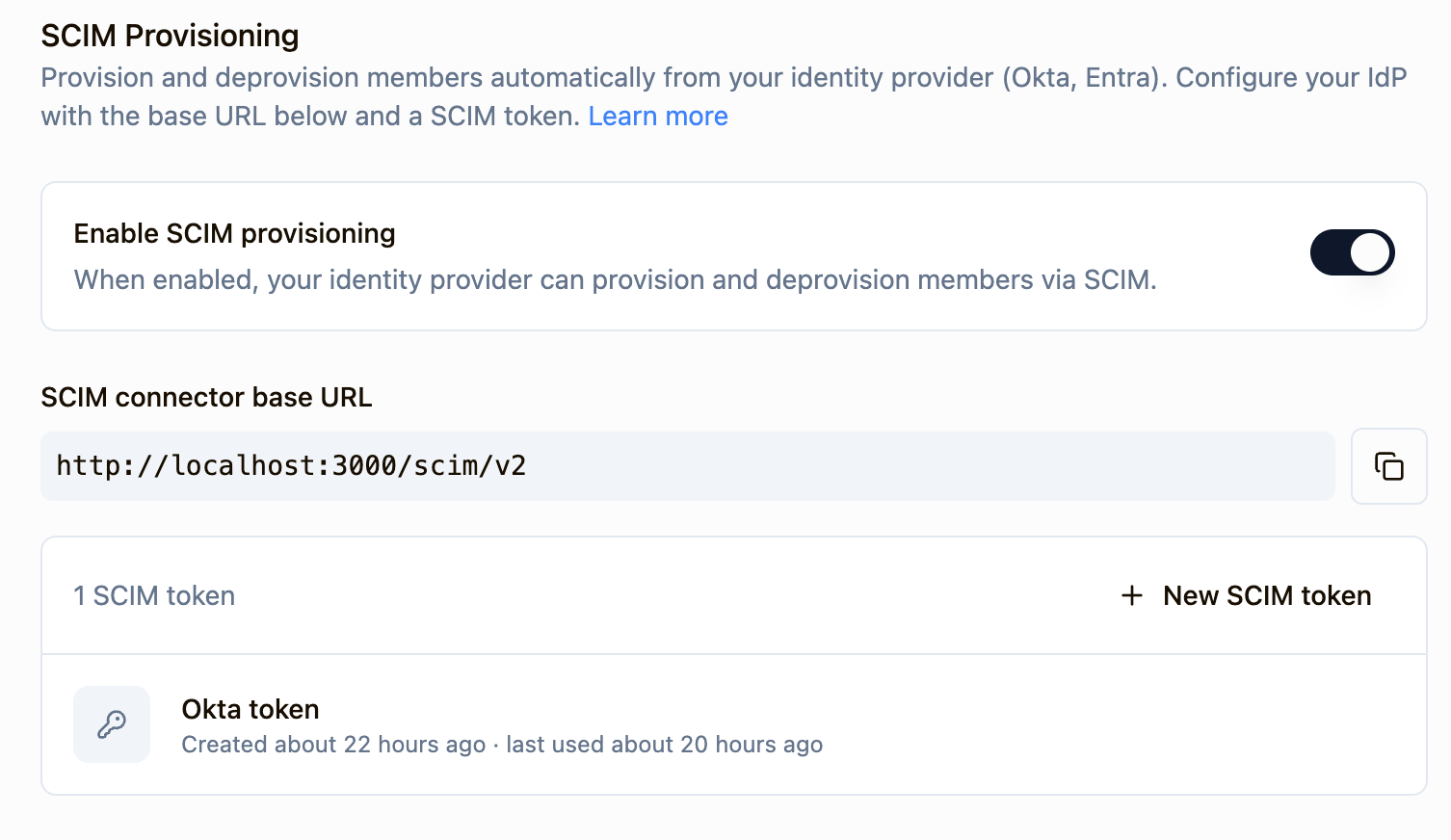
- Under the “SCIM provisioning” section, toggle the option to enable SCIM.
- You can now get your SCIM connector base URL and generate a SCIM Bearer auth token. These values will be needed to configure SCIM in your identity provider.
When SCIM provisioning is enabled, Admins will not be able to manage users from within Sourcebot as they will be kept up to date through your identity provider. Role assignments can still be managed within Sourcebot.
IdP-specific configuration notes
- Okta
Okta does not support SCIM in an OIDC app integration. To work around this, two apps need to be created:
- An OIDC app used for SSO.
- A SAML provisioning-only app. The SSO portion of the app should not need to be functional.
- Follow these instructions to setup a Okta OIDC app and configure it as a SSO provider in Sourcebot.
- In Okta admin pages, create a SAML 2.0 application. This app will be used for provisioning-only and will not be used for SSO. The sign-on URL and audience URI can be set to the base URL of your deployment.
- In the General tab, click Edit and choose SCIM in the Provisioning section and Save.
- In the Provisioning tab, enter the SCIM Base connector URL from Sourcebot.
- For the Unique identifier field for users section enter userName
- For Supported provisioning actions, enable “Push New Users” and “Push Profile Updates”
- For Authentication mode field, choose HTTP Header and enter your SCIM token generated in Sourcebot. You can now test the configuration and save
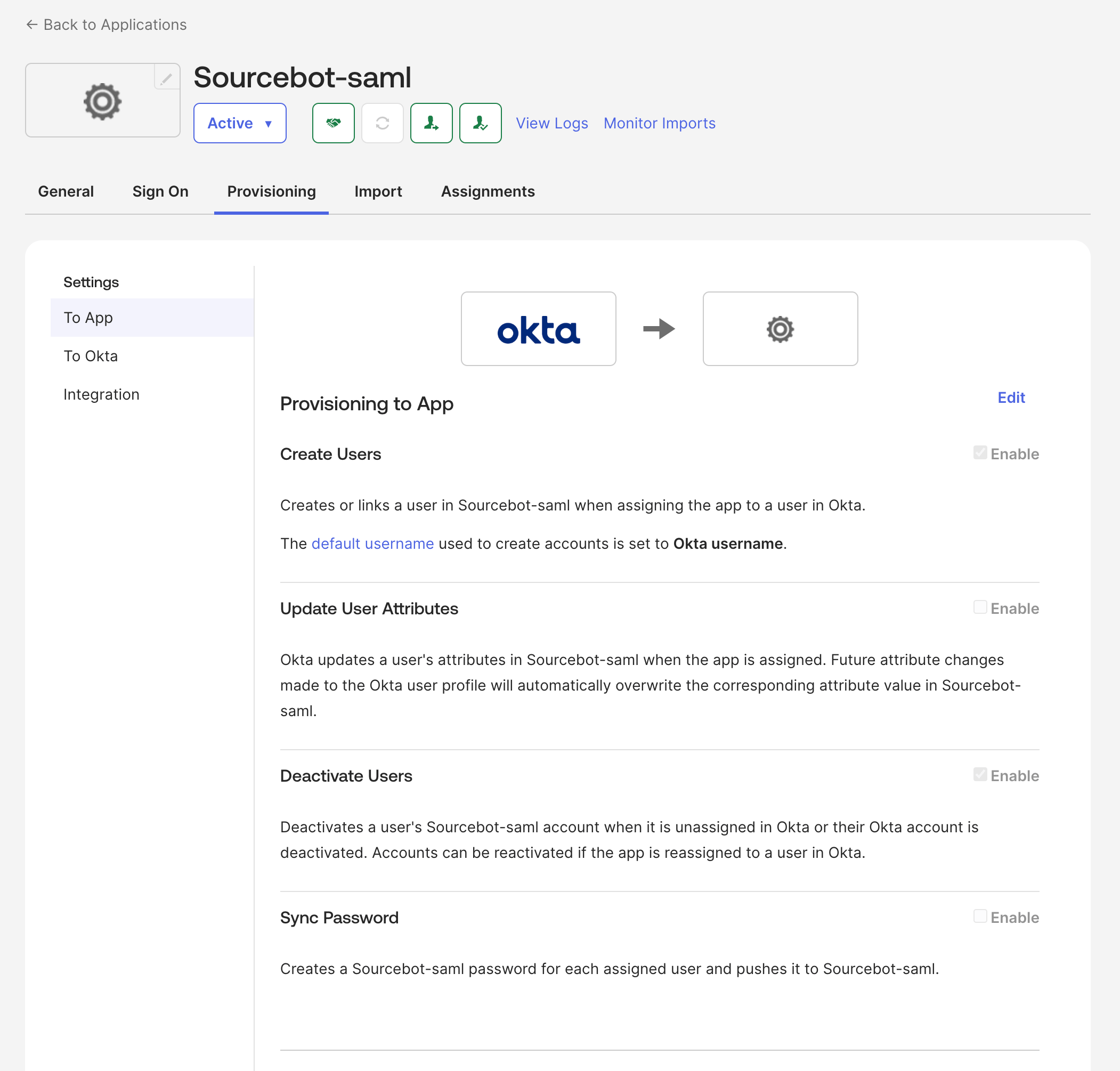
- Lastly, return to the Provisioning tab in Okta and edit your settings under “To App” to enable the SCIM functionality needed for your Sourcebot application (Create, Update and Deactivate users)
User lifecycle
Sourcebot represents organization users with three membership states:| Sourcebot state | Access | Billing |
|---|---|---|
| Pending | Can access the organization after signing in | Not billed |
| Active | Can access the organization | Billed |
| Suspended | Cannot access the organization | Not billed |
active: false, Sourcebot marks the user as Suspended. Suspended users cannot access the organization, and Sourcebot revokes their active sessions, API keys, and OAuth tokens.
If your identity provider reactivates the user by sending active: true, Sourcebot restores their membership as Pending. They become Active and billable again only after they sign in and access the organization.
Roles
SCIM does not assign Sourcebot roles. Users created through SCIM are added with the Member role. Owners can promote active members to owner, or demote owners to member, from Settings -> Members. Sourcebot prevents changes that would leave the organization without an active owner.Supported attributes
Sourcebot stores this subset of SCIM user attributes:| SCIM attribute | Sourcebot behavior |
|---|---|
userName | User email address |
emails | User email address; the primary email is preferred |
name.formatted | Display name |
displayName | Display name fallback |
active | Unsuspended or suspended membership state |
externalId | Stored IdP external identifier |
FAQ
What identity providers do you support?
What identity providers do you support?
SCIM provisioning should work with most identity providers that support SCIM user provisioning, but it has only been tested with Okta.
What version of SCIM do you support?
What version of SCIM do you support?
Sourcebot supports SCIM 2.0.
When do SCIM-created users become billable seats?
When do SCIM-created users become billable seats?
SCIM-created or reactivated users become billable seats after they sign in and access the organization. Until then, they appear as pending and do not count toward billing. Suspended users also do not count toward billing.